
Playing video games quietly, alone, is a relic of the past. Gaming has transformed into a loud, international stadium where performance is far more critical than playtime itself. Streaming services have popularized video games, yes, but more so, they’ve rewritten the rules of development. Game developers now have to consider the thousands of unseen spectators when they craft new worlds.
Game mechanics now focus on fast-paced, addictive gameplay that centers around watching players lose money. This isn’t the lengthy grind of previous video game formats. Developers must create games that offer entertainment value both during gameplay and spectatorship for success in today’s market.
The conventional wall between the gamer and the observer is gone. Modern titles now let players influence session outcomes, turning single-player campaigns into communal experiences. This democratization of the experience means entertainment is no longer passive. It makes people want more as they seek out specific platforms for high-octane content. They see it on screen and replicate it in the real world.
You can often look to enjoy your time with the top online slot games in reliable environments, as many players do. As the community grows, you’re alongside peers valuing security and variety. This shift from spectator to participant creates a feedback loop in which social connectivity determines a release’s success.
If a title can’t spark the capacity to start a conversation or community engagement, it often fails. It isn’t popular in a market ruled by viral moments. The developers are responding by incorporating chat-driven events and real-time polls into the gameplay loop. They want to give audiences a sense of ownership over their actions.
The Acceleration of Gameplay Through Instant Gratification Mechanics
Streaming culture doesn’t like dead airtime. Content creators can’t spend hours on basic gameplay since viewers expect key highlight moments. To cater to these changes in viewing habits, developers have implemented features that skip the wait.
One of the most infamous examples of this is “Buy Moments,” where players can pay to activate it. It’s instantly the meat of a game’s core or bonus gameplay. The concept of buying moments came directly from streamers needing to inflate their high uptime during a live stream.
The presence of these mechanics has affected the pacing of modern games, encouraging instantaneous stimulation over careful consideration. There has been an influx of buy-to-win games. Regular players have also caught on to what keeps influencers glued to their screens.
Engineering Volatility for the Viral Highlight Reel
The mathematics behind the hood has been modified to suit the demand for clippable content. Previously, it was anticipated that games were created to provide users with time-extending elements by incorporating frequent, small rewards. Modern design ideology favors extreme volatility.
The goal is to achieve a unique outcome that will make the 30-second social media clip truly captivating. To create life-changing potential, developers now offer staggering win limits, with some exceeding 5,000x the initial bet. Such a feast-or-famine model creates ideal dramatic tension for a live audience. The series of defeats creates tension, and the massive payback at the end of the story feels like a climax.
This change tends to push away casual players who like things to stay the same. However, it appeals to the demographic that perceives gaming as high-stakes theater. High-volatility games currently account for the vast majority of all new releases in specific genres. It’s confirmed that the possibility of a viral moment stimulates development.
Visual Design and the Demand for Mobile Readability
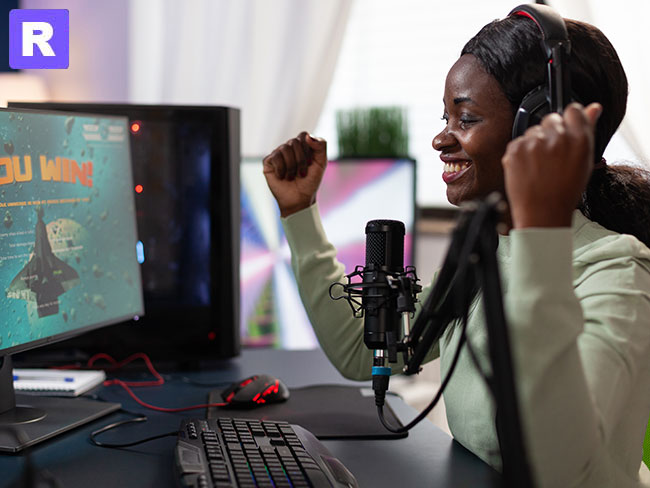
Games have to be readable when shrunk down to the small video window on someone’s phone. This fact has driven decisions in visual aesthetics and user interface design immensely. Compression robs more minor details and smooth animations of displaying clearly in video format.
The art direction has to become more vibrant, bold, and intuitive. Information players read, such as win amounts or the active multiplier, must be large and high-contrast. It’s such a display that allows for easy reading.
Space must be maximized not only for the player but also for the streamer’s camera and chat box. Suppose something doesn’t look flashy or engaging in a thumbnail or on someone’s social media feed. Then it’s simply cutting off its biggest marketing channel entirely.
When the Audience Becomes the Architect
Over the past 10 years, live broadcasting has revealed its disruptive power as a potent force in game design. Mechanics no longer passively exist; they’re dynamic machinery designed to captivate an audience as much as the player. With demarcation lines between producers and consumers steadily blurring, it’s anticipated that further drastic changes will occur.
The direction is toward a more socially integrated, direct-to-consumer industry. The games of tomorrow won’t merely be played but acted, televised, and shared. All the mechanics will be on the same nanochip radio, transmitting the virtual audience’s screams to the utmost limits.